Nobody teaches you what a cuticle is for. It arrives unannounced, gets trimmed by someone at a salon twice a year, and spends the rest of its life being washed, sanitized, wintered, and typed on. Then we wonder why it looks the way it does.
Here’s the short version: the cuticle is a thin band of skin that seals the base of your nail, right where new nail is being formed. It’s a gasket. When it’s soft and intact, the whole nail bed looks tidy and finished — that’s most of what “well-kept hands” actually means. When it dries out, it lifts, roughens, and catches on everything, and no polish in the world can talk over it.
Why daily beats dramatic
Cuticle care fails when it’s treated like an event. A monthly rescue session is twenty minutes of effort applied to a problem that rebuilt itself by Thursday, because the thing working against your cuticles — water, sanitizer, weather, dishes — shows up every single day.
The fix isn’t more effort. It’s less effort, more often.
Thirty seconds a day is enough. A thin coat of oil, massaged in until the shine settles, keeps the skin around the nail soft and conditioned so it never gets the chance to go rough. It’s the difference between watering a plant and reviving one — the first is trivial, the second is a project.
Oil for the cuticle, balm for everywhere
Our routine has two products, and they do different jobs.
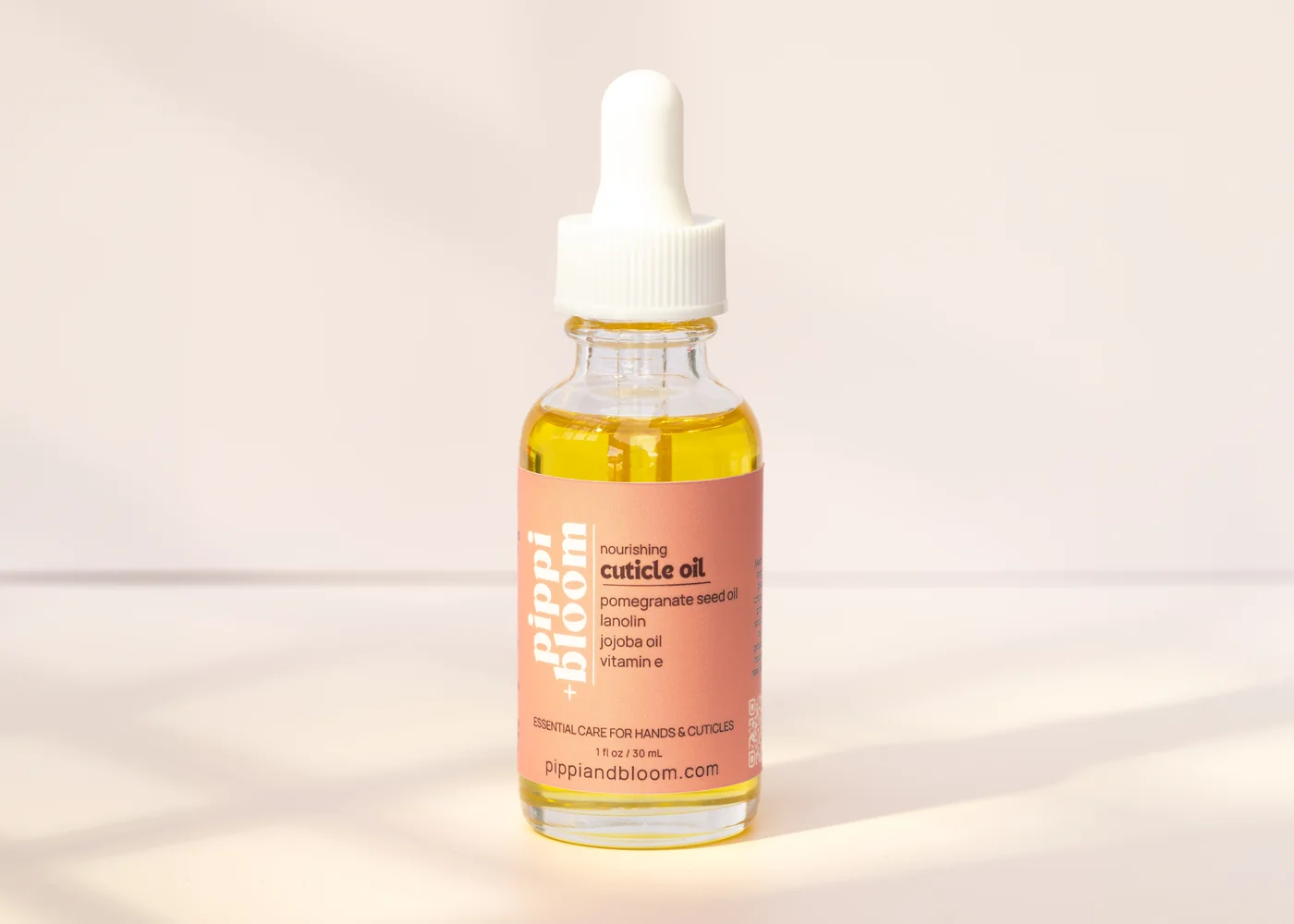
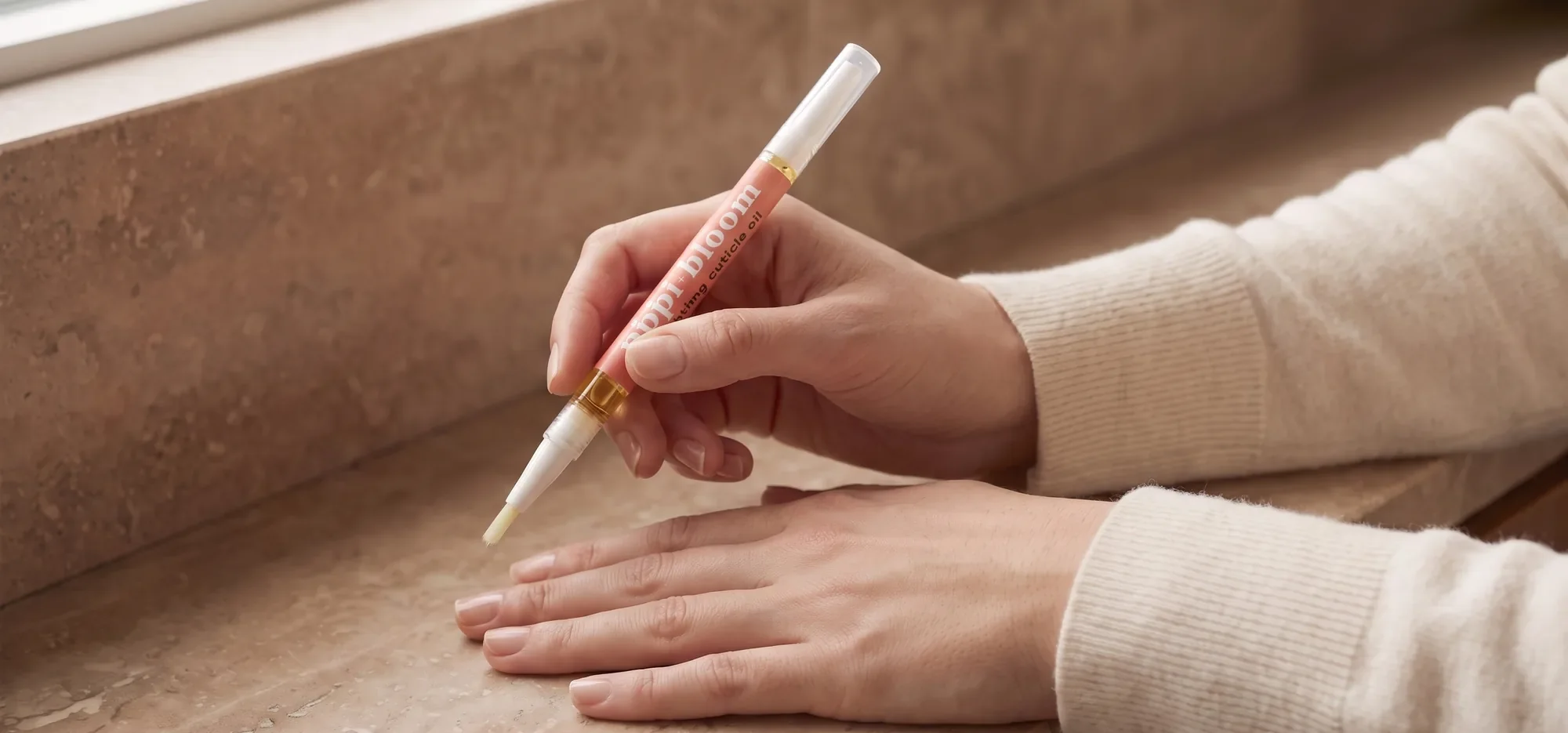
The oil is the daily step. Our cuticle oil blends jojoba, apricot kernel, and pomegranate seed oils — pomegranate leading — and is formulated to absorb deeply and nourish longer, with ultra-refined liquid lanolin keeping the nourishment close to the skin instead of letting it leave when the shine does. Sweep it along each cuticle, then massage in small circles. The massage is not decoration; it’s how the oil gets where it’s going, and it feels like a small kindness at a desk in the middle of a long afternoon.
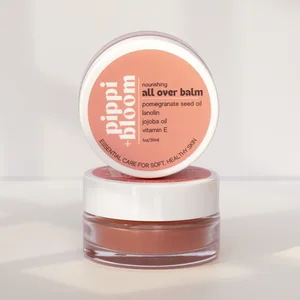
The balm goes everywhere. The all over balm is its own richer formula, anchored by lanolin, and its job is different: it repairs skin that has already cracked or roughened, and it stays put. Use it wherever skin runs dry — cuticles, knuckles, elbows, knees, feet, heels — best overnight, before gardens and dish sinks, or ahead of a hard-wearing day. And at night, a little applied over oiled cuticles locks the oil in while you sleep.
Brush or dropper?
The oil comes in two applicators, and they’re the same formula serving two different hours of your life.
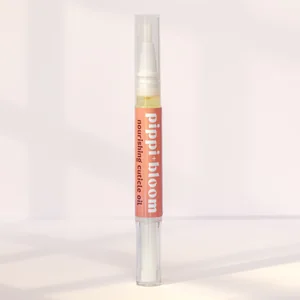
The brush is the one that leaves the house. It lives in a handbag or a desk drawer, it doesn’t drip, and it turns a red light, a boarding gate, or the minute before a meeting into cuticle care. If your hands are on display for work — or simply on keyboards all day — this is the one that builds the habit.
The dropper is the one that stays home. One deliberate drop at the base of each nail, massaged in slowly, ideally while something on the stove is doing its own slow work. It’s the same oil, but the pace is the point.
Making it stick
Habits survive by attaching themselves to things you already do. Keep the brush where your day happens and the dropper where your evening ends — nightstand, vanity, next to the kettle. If you remember nothing else: oil daily, balm nightly, and let the repetition do the heavy lifting.
That’s the whole routine. No steps to memorize, no tools, no appointment. Thirty seconds, twice a day — and hands that quietly look like someone cares for them, because someone does.
You can see the full sequence, with both applicators, on the how-to page.